“We want something low maintenance.”
It is probably one of the most common requests we hear when discussing a new garden.
And it makes sense.
Most homeowners want a garden that looks great without requiring every weekend to be spent pruning, watering, mowing and cleaning.
The important thing to understand is that low maintenance isn’t a particular style of garden.
It is the result of good design, appropriate plant selection and sensible material choices.
Start With The Right Plants
The easiest plant to maintain is usually one that naturally suits the conditions where it has been planted.
Before selecting plants, consider:
- Sun and shade
- Soil conditions
- Drainage
- Exposure to wind
- Available space
- Desired mature size
A plant constantly fighting unsuitable conditions will generally require more attention.
Choosing species that naturally suit the site is one of the simplest ways to reduce maintenance.
Consider Mature Plant Size
A small plant at the nursery doesn’t necessarily remain small.
Planting without considering mature size can result in gardens that require constant pruning or plants that eventually overwhelm paths, windows and neighbouring species.
Giving plants enough space to develop naturally can dramatically reduce future maintenance.
It can also create a more established and balanced garden.
Reduce Unnecessary Lawn
Lawns can be fantastic.
They provide usable space for children, pets and entertaining and create visual relief between garden areas.
But lawn also requires mowing, edging, watering, feeding and occasional repair.
If an area of lawn serves no real purpose, replacing it with planting, paving or another suitable surface may reduce maintenance.
The goal isn’t necessarily to eliminate lawn.
It is to have the right amount.
Mulch Matters
A good layer of mulch can help:
- Retain soil moisture
- Suppress weeds
- Regulate soil temperature
- Improve the appearance of garden beds
Mulch will still need replenishing over time, but it can significantly reduce ongoing garden maintenance.
Irrigation Can Reduce Work
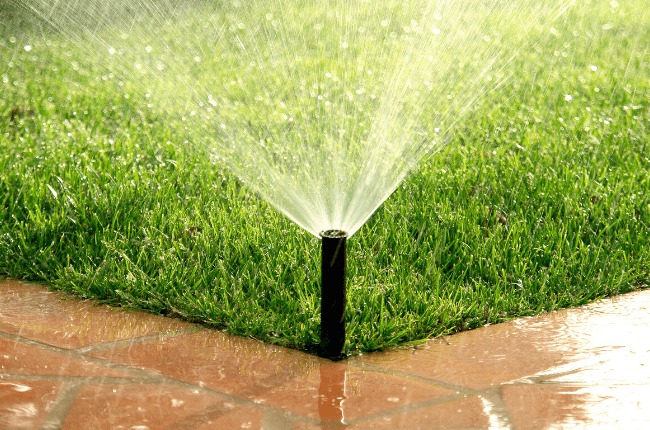
Automatic irrigation doesn’t make a garden maintenance-free, but it can remove one of the most repetitive tasks.
This is particularly useful during plant establishment and hot weather.
Combined with suitable plant selection and mulch, irrigation can make maintaining larger garden areas much more manageable.
Don’t Overcomplicate The Planting Palette
Using dozens of different plant species doesn’t automatically create a better garden.
Repeating carefully selected plants can create a stronger visual result while simplifying maintenance.
Mass planting can also make it easier to understand how different areas of the garden should be cared for.
Simple doesn’t have to mean boring.
Hardscape Can Reduce Maintenance — But It Still Needs Thought
Paving, gravel and other hardscape elements can reduce the amount of garden requiring ongoing care.
However, replacing every plant with paving isn’t necessarily the answer.
Plants provide shade, softness, privacy, seasonal change and a connection between the house and garden.
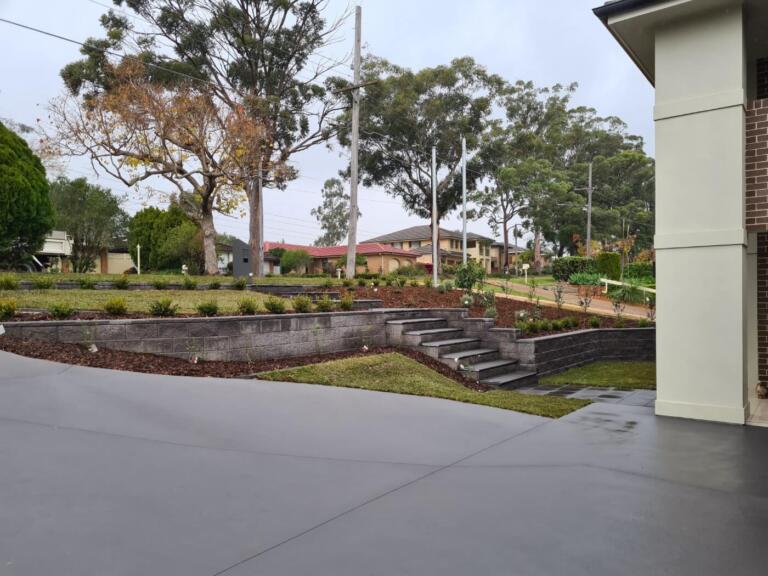
The best low-maintenance landscapes usually find a balance between hardscape and planting.
Native Doesn’t Automatically Mean Maintenance-Free
Australian native plants can be excellent choices for Sydney gardens, particularly when matched to suitable conditions.
But “native” doesn’t automatically mean a plant requires no maintenance.
Some grow quickly, some require pruning and others may not suit a particular soil or microclimate.
Plant selection should always be based on the individual site.
What Does A Good Low-Maintenance Garden Look Like?
There isn’t one answer.
A low-maintenance Sydney garden might include:
- Carefully selected structural planting
- Repeated plant varieties
- Appropriate groundcovers
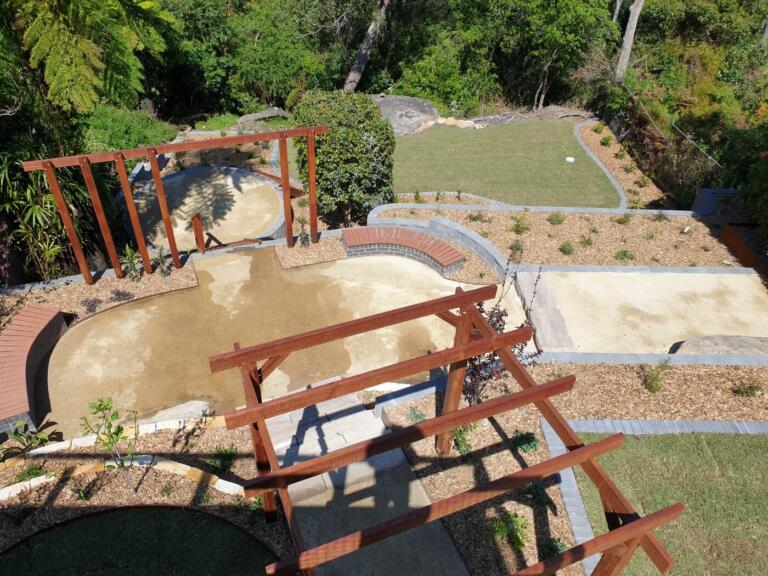
- Mulched garden beds
- Useful rather than excessive lawn
- Automatic irrigation
- Durable paving
- Plants selected for their mature size
The objective is to create a garden that can mature gracefully rather than one that needs constant intervention to keep it under control.
Final Thoughts
There is no such thing as a completely maintenance-free garden.
Living landscapes change and grow.
But thoughtful design can dramatically reduce the amount of work required.
Choose plants suited to the site, allow enough room for them to mature, simplify the planting palette and use lawn and hardscape intentionally.
A good low-maintenance garden shouldn’t look like someone designed it to avoid gardening.
It should simply look good without demanding your attention every weekend.