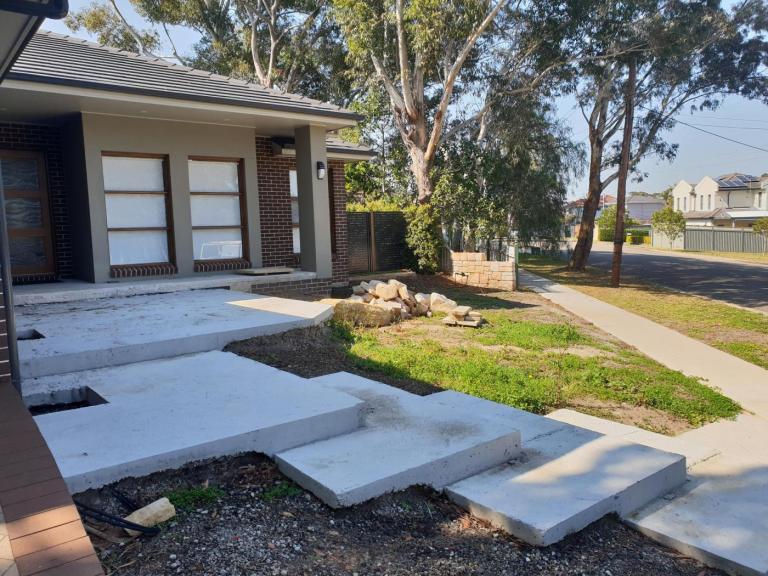
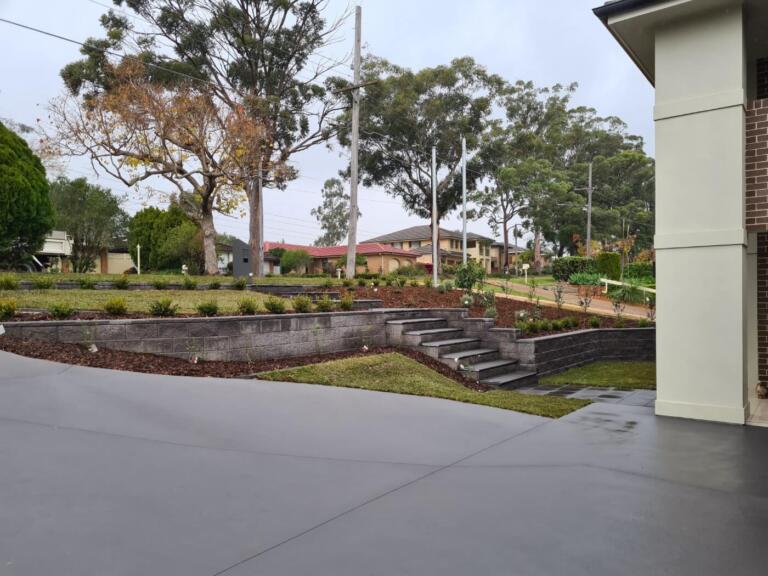
A successful landscaping project begins long before the first excavator arrives.
Some of the most expensive problems we see during landscape construction can be traced back to decisions made — or not made — during the early planning stages.
Landscaping involves numerous interconnected elements. Levels affect drainage. Retaining walls affect usable space. Paving affects finished heights. Plant selection affects irrigation. Access affects construction costs.
Getting the overall plan right from the beginning can make the entire process smoother.
Here are some of the most common mistakes homeowners can avoid.
- Starting Without A Realistic Budget
It is easy to build a wish list before understanding what that wish list is likely to cost.
Swimming pool surrounds, retaining walls, paving, planting, lighting, irrigation and outdoor entertaining areas can quickly become a substantial project.
Having a realistic budget early allows the design and scope to be developed around what is achievable.
A good contractor can often suggest where money is best spent and where the scope can be simplified without compromising the overall result.
- Designing Before Understanding The Site
A landscape should respond to the property.
Important considerations include:
- Levels
- Drainage
- Access
- Existing structures
- Soil conditions
- Sun and shade
- Services
- Neighbouring properties
A design that looks fantastic on paper but ignores how the site actually works can create expensive problems during construction.
- Choosing Finishes Before Solving Function
It’s understandable that homeowners get excited about stone, plants and finishes.
They’re the enjoyable part.
But before choosing between travertine and crazy paving, it is worth asking:
How will the backyard actually work?
Consider circulation, entertaining, access, privacy, drainage, storage and the relationship between indoor and outdoor spaces first.
Materials should support the design rather than define it.
- Trying To Fit Everything In
More features don’t automatically create a better landscape.
Sometimes the strongest design decision is leaving something out.
Trying to include a pool, fire pit, outdoor kitchen, lawn, oversized entertaining area and multiple garden zones within a limited space can leave the entire backyard feeling cramped.
Prioritise the features that will genuinely be used.
- Underestimating Site Access
Access has a major influence on landscape construction.
A property with direct machine access is very different from a backyard where every tonne of material needs to travel through a narrow side passage.
Restricted access can affect:
- Labour
- Excavation
- Waste removal
- Material delivery
- Machinery selection
- Construction time
It should be considered early, particularly when establishing a budget.
- Treating Drainage As An Afterthought
Drainage needs to be part of the design from the beginning.
Finished levels, paving falls, retaining walls, lawns and garden beds all influence how water moves around a property.
Trying to solve drainage after everything else has been designed can create unnecessary compromises.
- Selecting A Contractor On Price Alone
Price matters.
But the cheapest quotation and the best value are not necessarily the same thing.
When comparing landscape contractors, consider what is actually included, the quality of materials proposed, construction methodology, communication and previous experience.
Two quotations describing a “retaining wall” may represent completely different construction methods and outcomes.
- Making Too Many Decisions During Construction
Projects naturally evolve, and sometimes great ideas appear once construction begins.
However, constant changes can affect cost, timing and other parts of the project.
The more decisions that can be resolved before construction begins, the more predictable the process becomes.
Good planning doesn’t prevent creativity.
It gives creativity a framework.
Final Thoughts
Most landscaping mistakes are easier and cheaper to fix on paper than during construction.
Before work begins, establish:
- How you want to use the space
- What problems need solving
- What your priorities are
- What you are comfortable spending
- Whether professional design is required
A little more thought at the beginning can save a significant amount of money, compromise and frustration later.
Good landscaping isn’t just about building things well.
It is about building the right things in the right places for the right reasons.